

Philippines: Building the "Sea Forest" Together with Employees and Their Families - Mangrove Planting Initiative
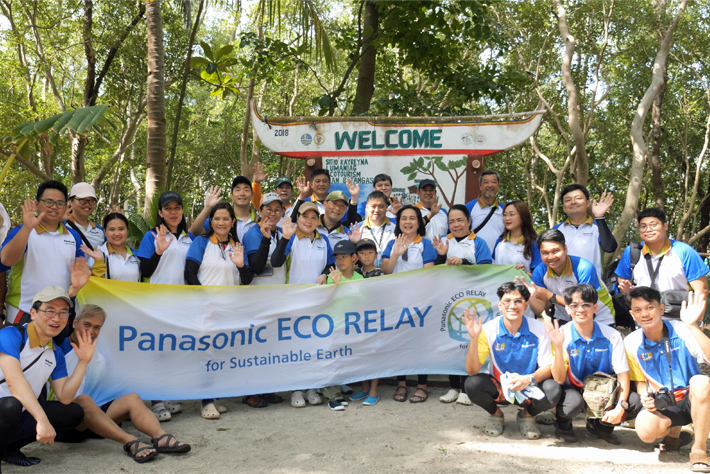 Group photo of participants
On January 10, a total of 26 participants, including employees of Panasonic Manufacturing Philippines (PMPC) and their family members planted 200 mangrove trees at Sitio Kayreina Lumaniaug Ecotourism in Lian, Batangas City.
Mangroves, along with seagrasses, seaweeds, and salt marshes, are vital coastal and marine ecosystems. They absorb atmospheric carbon dioxide through photosynthesis and store it for long periods in the seabed and deep sea. This naturally stored carbon is known as "blue carbon" and is gaining attention as an effective measure against climate change. Mangroves also play a crucial role in preserving biodiversity, but their degradation and loss have become global challenges, making their conservation and restoration urgent issues worldwide.
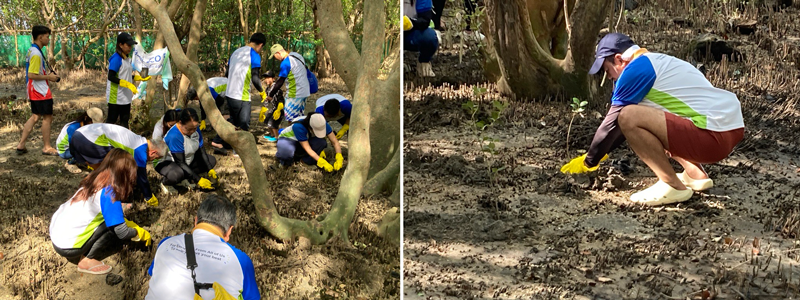 Mangrove planting (At high tide, the area is submerged, creating a "sea forest" landscape)
Employees who participated in the event shared their thoughts, saying, "I was happy to contribute to improving the global environment," "Through our efforts, I hope to help pass on a better world to the next generation," and "I learned how mangroves contribute to CO₂ reduction and biodiversity conservation.
"The event was covered by students from Cainta Catholic College, participants in Panasonic's video production support program "Kid Witness News (KWN)." The video will be released soon on the KWN website. In addition, a video combining this initiative with seagrass bed conservation activities in Japan will be published on our "Act for BLUE CARBON" website in early March.