

Leveraging Business Expertise to Support Student-Led App Development ~Panasonic IS's Industry-Academia Collaboration Initiative ~
Panasonic Information Systems Co., Ltd. (Panasonic IS) has been engaging in industry-academia collaboration as part of its CSR activities, building on long-standing relationships established through the provision of IT solutions to educational institutions across Japan. By leveraging its core business expertise, Panasonic IS has consistently supported student learning.
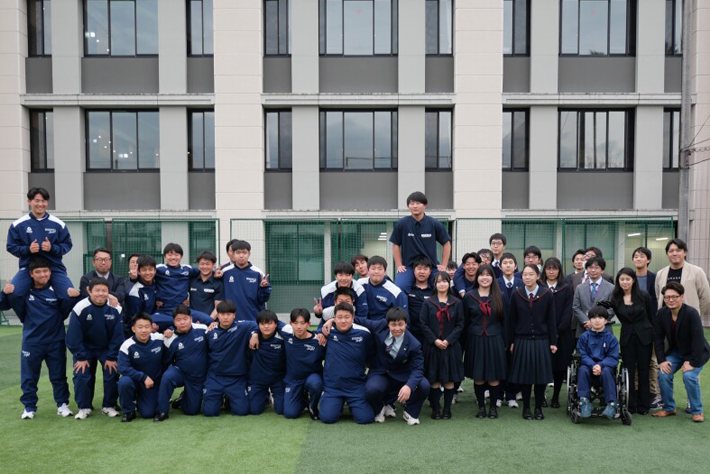
In fiscal year 2025, Panasonic IS partnered with Riseisha High School in Osaka Prefecture to support a student-led app development project. Employees from the Corporate Planning Department, Analytics Solutions Business Division, and Human Resources & General Affairs Department collaborated over a period of approximately six months. As a result, a reporting session was held at the school on March 6, where stakeholders and media were invited to view a jointly developed app for strengthening the rugby team's physical performance.
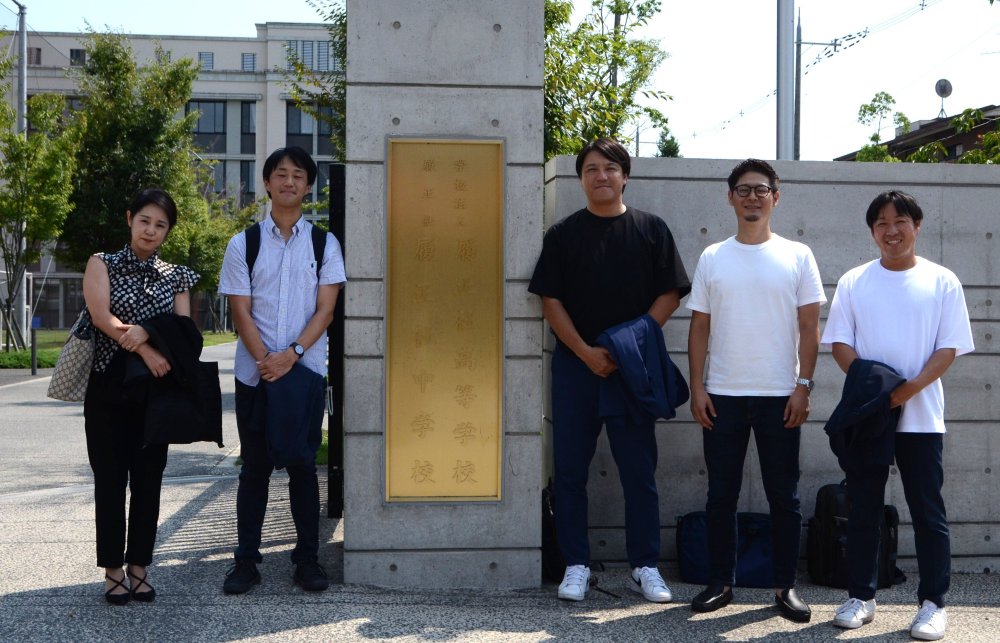
Panasonic IS members who supported the students in this initiative
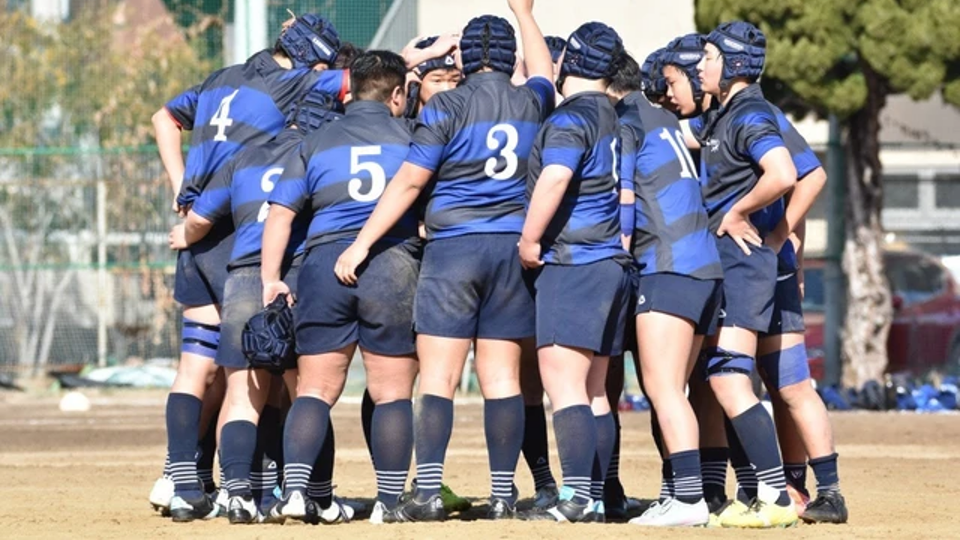
Riseisha High School established its rugby team in April last year, with 20 first-year students aiming for their inaugural appearance at the National High School Rugby Tournament. The school's programming seminar involves 16 students from grades 1 to 3 who participate three times a week after school, learning basic Python programming and game development to strengthen logical thinking skills. In this initiative, programming seminar students tackled the challenge of managing the rugby team's physical data to support their tournament ambitions. Panasonic IS supported the project by leveraging its expertise in IoT data utilization.
■ Aiming for Better App Development Through Agile Methodology
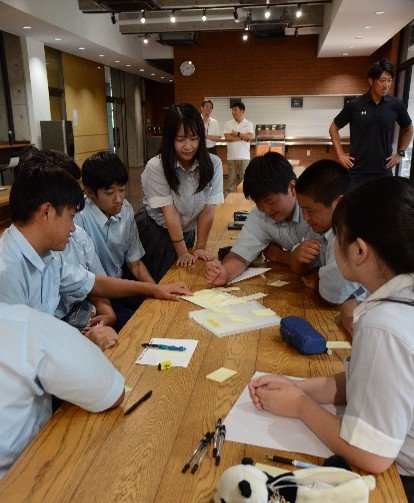
The project began with a kickoff meeting in late August involving programming seminar students, rugby team members, and Panasonic IS employees. Panasonic IS first provided a lecture on the app development process, followed by a requirements definition workshop. Students then interviewed rugby team members to identify their needs and determine the app's direction.
Afterward, students led the development process independently, receiving monthly follow-up support from Panasonic IS over approximately six months.
By utilizing a cloud-based business efficiency platform and automation technologies, the team developed a system that streamlined data collection, analysis, and sharing. Through agile development -- building in small increments and continuously improving -- the app was refined based on feedback from rugby team members who used it in practice.
■ Outcomes of App Implementation and Expansion Within the School
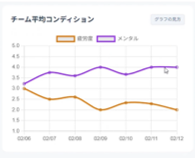
Previously, coaches manually transferred physical data received via email or messaging app into Excel. With the introduction of the app, this process was eliminated. Coaches can now manage all players' conditions in a single dashboard and visualize weight changes, enabling them to quickly identify signs of injury or health changes and provide appropriate advice.
For programming seminar students, this initiative enhanced not only their technical skills but also their motivation through direct interaction with professionals. Many students took the lead in various aspects, such as serving as MCs during the reporting session, further enhancing their independence. The app is scheduled to be fully operational from fiscal year 2026, and Panasonic IS plans to continue its collaboration with the school.